Beyond Calories: Why the Degree of Food Processing is the New Metric for Health
New research reveals that how food is made matters as much as what's in it. Discover why ultra-processed foods (UPFs) disrupt metabolism and hormones, even when calories are equal, and how to navigate the modern food landscape using precision nutrition.
Modern Food Habits
For decades, the golden rule of nutrition was simple: calories in versus calories out. If you wanted to manage your weight or improve your health, you looked at the back of the package, checked the caloric density, and perhaps glanced at the fat or sugar content. However, as we move through 2025 and 2026, a fundamental paradigm shift is occurring in nutrition science. Researchers and global health bodies are moving away from simple calorie counting toward a more complex and critical metric: the degree of food processing.
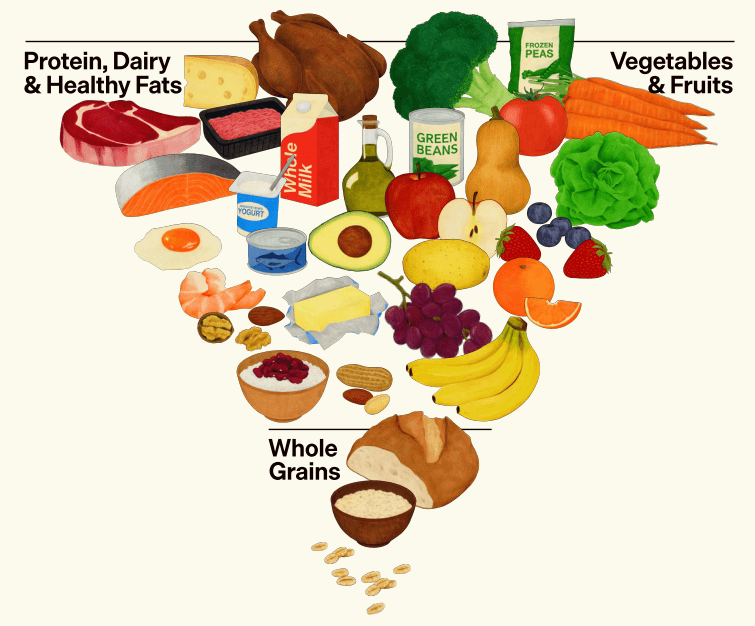
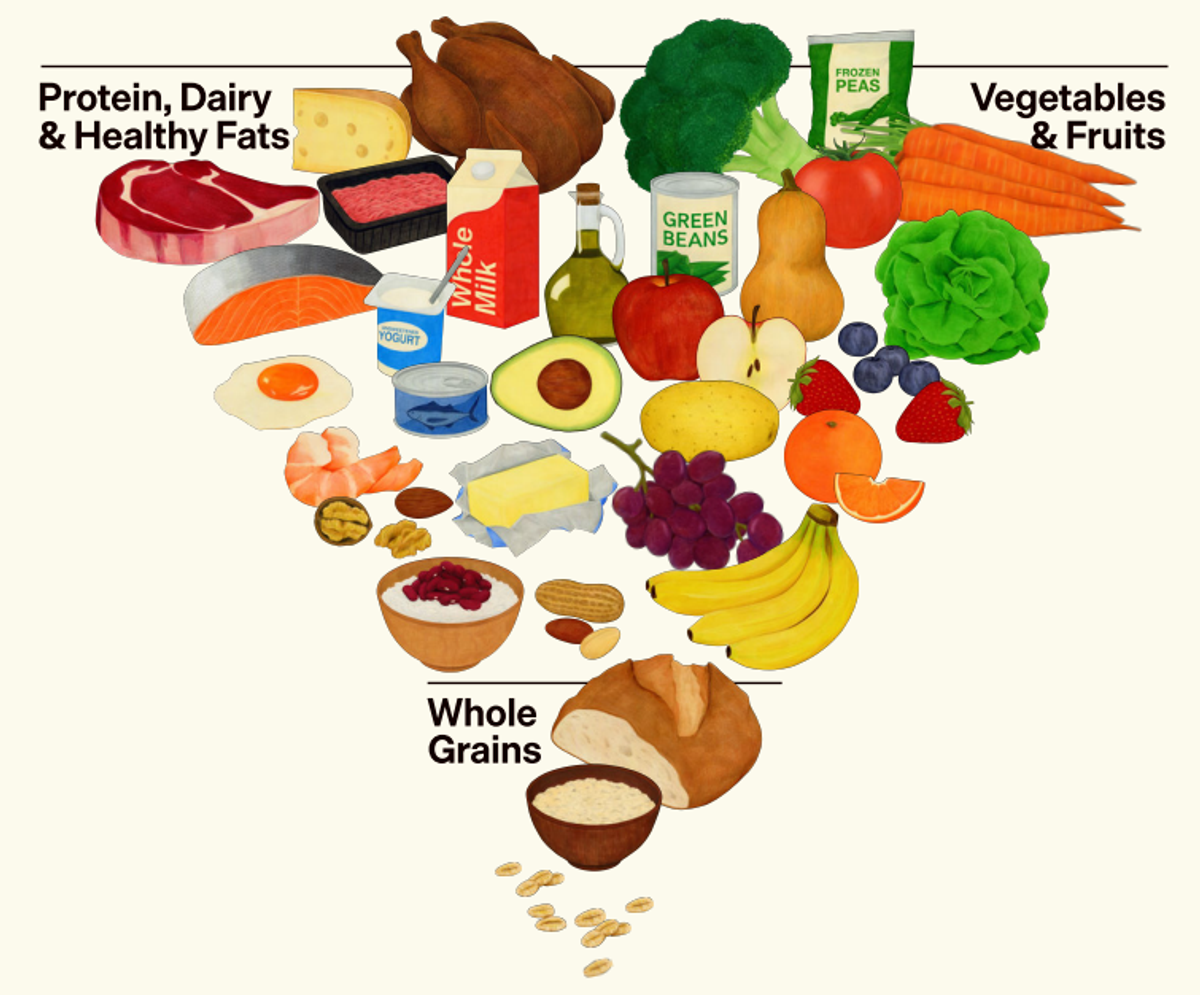
The Healthy Eating Plate offers a blueprint for nutritional health. Source: Harvard Nutrition Source
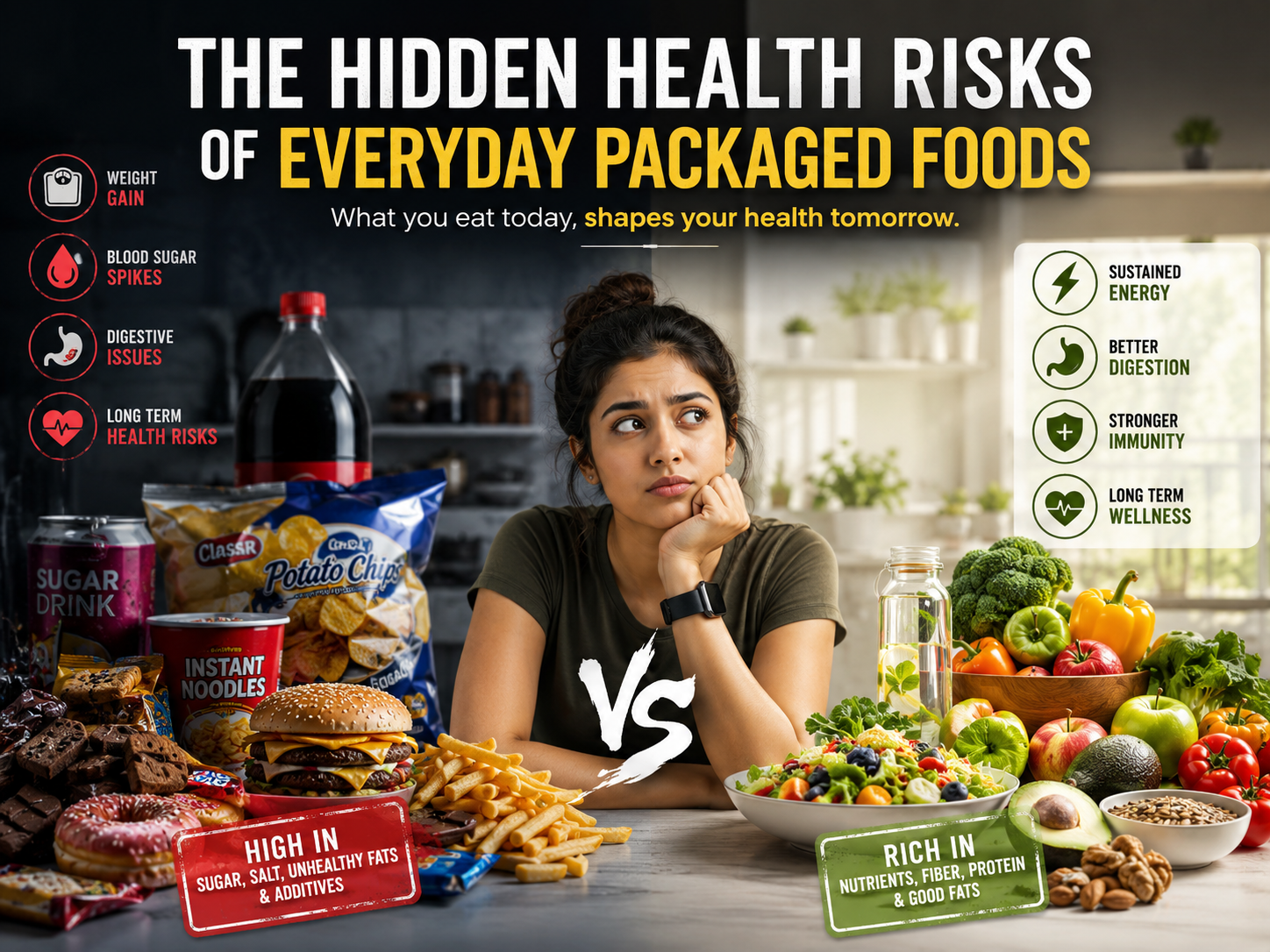
This shift isn't just about avoiding 'junk food.' It is about understanding how industrial methods, additives, and packaging alter the way our bodies respond to nutrients. The emerging consensus is that ultra-processed foods (UPFs) pose a unique risk to our metabolic, reproductive, and cognitive health—risks that exist even when the calorie counts are identical to whole-food alternatives.
The Equal Calorie Paradox: Why Processing Trumps Calories
One of the most significant breakthroughs in this field came from a landmark study published in Cell Metabolism in August 2025. Researchers at the University of Copenhagen conducted a tightly controlled trial to answer a burning question: if two people eat the exact same amount of calories, protein, carbohydrates, and fat, but one eats whole foods and the other eats ultra-processed foods, does it change their health outcome?
Your AI health companion
Join mySutra.ai and start healthy living today
Personalized wellness guidance, smarter habits, and support for the life you want to live.
The results were startling. Individuals on the high-UPF diet gained approximately 1 kilogram more fat mass over the study period compared to those on a minimally processed diet, despite the caloric intake being identical. This discovery suggests that the human body does not process industrial ingredients the same way it processes natural ones. Industrial processing often breaks down the physical structure of food (the food matrix), leading to faster absorption and disrupted metabolic signaling. This 'metabolic confusion' can lead to weight gain and insulin resistance even when you think you are staying within your daily calorie budget.
The 32 Health Risks: A Comprehensive Look at UPFs
It is no longer just about weight. A massive umbrella review of epidemiological meta-analyses published in The BMJ in 2024 provided a sobering look at the reach of ultra-processed foods. The review found consistent associations between high UPF consumption and 32 different health parameters. These include significantly increased risks of cardiovascular disease, type 2 diabetes, and common mental disorders such as anxiety and depression. Most notably, the research linked high UPF intake to increased all-cause mortality.
Why are these foods so damaging? Beyond the lack of fiber and the presence of excess sodium, UPFs are often engineered to be 'hyper-palatable.' This means they are designed to bypass our body’s natural satiety signals, making it difficult for the brain to register when we are actually full. This leads to a cycle of overconsumption and chronic inflammation that affects every system in the body, from our gut microbiome to our heart.
The New Sugar Standard: The 10-Gram Rule
As part of this shift toward prioritizing food quality, the 2025–2030 Dietary Guidelines for Americans (DGA) have introduced a pivotal new recommendation that is being adopted by health enthusiasts worldwide: the 10-gram sugar threshold. Unlike previous guidelines that focused on a percentage of total daily calories, this new standard recommends that no single meal should contain more than 10 grams of added sugars.
This change is designed to prevent 'glucose spikes.' When we consume a large amount of processed sugar in one sitting—common in breakfast cereals, flavored yogurts, or energy bars—our blood sugar skyrockets, forcing a massive insulin response. Over time, these repeated spikes drive insulin resistance, a precursor to metabolic syndrome and type 2 diabetes. By capping sugar at 10 grams per meal, the guidelines aim to keep blood glucose levels stable throughout the day, protecting our long-term metabolic health.
Hormonal Disruptors and the Impact on Reproductive Health
Perhaps the most concerning aspect of the UPF paradox is the role of food packaging. Modern industrial food production relies heavily on plastics and coatings that contain endocrine disruptors, such as phthalates. Recent studies from 2025 have highlighted a direct link between the consumption of highly processed, packaged foods and impaired reproductive health.
In young men, high exposure to these chemicals via food packaging has been linked to decreased testosterone levels and reduced sperm quality. For women, endocrine disruptors can interfere with ovulation and hormonal balance. This research underscores that the risk of UPFs isn't just about what is inside the food, but also how the food interacts with its environment before it reaches your plate. Transitioning to fresh, unpackaged whole foods is increasingly seen as a vital step for those looking to protect their reproductive and hormonal vitality.
The Nutrient Void: Why Fortification Isn't Enough
For years, the food industry has used 'fortification'—adding synthetic vitamins and minerals back into processed foods—as a way to market UPFs as healthy. However, Harvard Health experts note that heavy processing destroys 'trace compounds' like phytonutrients, flavonoids, and antioxidants that occur naturally in plants. These compounds are essential for cellular repair and immune function.
Traditional fortification cannot replace this 'nutrient void.' Natural foods contain a complex synergy of compounds that work together to enhance absorption and health benefits. When we rely on ultra-processed 'fortified' foods, we miss out on these protective elements, leading to a state of being overfed but undernourished.
Precision Nutrition: Navigating the Modern Aisle with AI
While the challenges of the modern food environment are significant, technology is providing new tools to fight back. The global precision nutrition market is booming, projected to reach over $22 billion by 2032. AI-powered platforms are now being integrated into clinical care to help individuals understand their unique metabolic responses.
Services like Viome and InsideTracker analyze gut microbiomes and blood biomarkers to identify how a specific person reacts to certain ingredients. For example, while one person might handle a specific processed starch relatively well, another might experience a massive inflammatory response. This personalized data allows consumers to navigate the grocery store with 'surgical' precision, choosing the foods—and the degrees of processing—that best suit their unique biology.
Practical Strategies for a 'Real Food' Lifestyle
Transitioning away from a UPF-heavy diet doesn't have to happen overnight. Public health initiatives like the 'Return to Real' movement emphasize small, sustainable changes. Start by looking for 'single-ingredient' foods—eggs, lentils, vegetables, and whole grains—as the foundation of your meals. When buying packaged goods, use the 'Five Ingredient Rule': if a product has more than five ingredients or contains items you wouldn't find in a home kitchen (like maltodextrin or soy lecithin), it is likely ultra-processed.
By shifting our focus from the quantity of calories to the quality of processing, we can reclaim control over our metabolic health. In the age of the UPF paradox, the most powerful health tool we have is the choice to eat food that looks like food.
This article is for general wellness and educational purposes only. It is not medical advice. Consult a qualified healthcare professional before changing your diet, supplements, or health routine.
This article is for general wellness and educational purposes only. It is not medical advice. Consult a qualified healthcare professional before changing your diet, supplements, or health routine.
This article is for general wellness and educational purposes only. It is not medical advice. Consult a qualified healthcare professional before changing your diet, supplements, or health routine.
This article is for general wellness and educational purposes only. It is not medical advice. Consult a qualified healthcare professional before changing your diet, supplements, or health routine.
Sources
National Institutes of Health (NIH): [Strategic Plan for Nutrition Research (2025-2029)](https://www.nih.gov) The BMJ: [Ultra-processed food exposure and adverse health outcomes: umbrella review (2024)](https://www.bmj.com) Cell Metabolism: [Effect of ultra-processed food consumption on male reproductive and metabolic health (2025)](https://www.cell.com/cell-metabolism/home) Harvard T.H. Chan School of Public Health: [Analysis of the 2025–2030 Dietary Guidelines for Americans](https://www.hsph.harvard.edu) * World Health Organization (WHO): [Updated Guidelines on Free Sugars and Fiscal Policies (2024-2025)](https://www.who.int)